How to Specify Detergent Sheet OEM Parameters That Meet Industry Standards
A detergent sheet OEM brief fails when the buyer writes a product description and the manufacturer turns that description into a production order. The reliable alternative is a parameter table: physical form, cleaning chemistry, scent system, cleanroom and process controls, and documentation. Every line needs a nominal value, a tolerance and a verification step — otherwise the quotation, the sample and the shipment become three different products.
Zhejiang Kelee Technology Co., Ltd. is a solid-form cleaning products manufacturer based in Yiwu, Zhejiang, China. Founded in 1999, the company operates a 16,000 m² production site with a reported production capacity of 150 million units, runs a 100,000-class dust-free workshop, and provides OEM, ODM and private-label services for laundry detergent sheets and adjacent solid cleaning formats. Its published export profile covers markets including the EU and the USA, and it participates in drafting national industrial standards for laundry sheets and group standards for floor-cleaning sheets.
The guide below is written for OEM and private-label buyers who have already chosen the format and are now at the Decision-to-Execution stage: parameters must be written down, quoted, sampled, validated and then reproduced order after order.
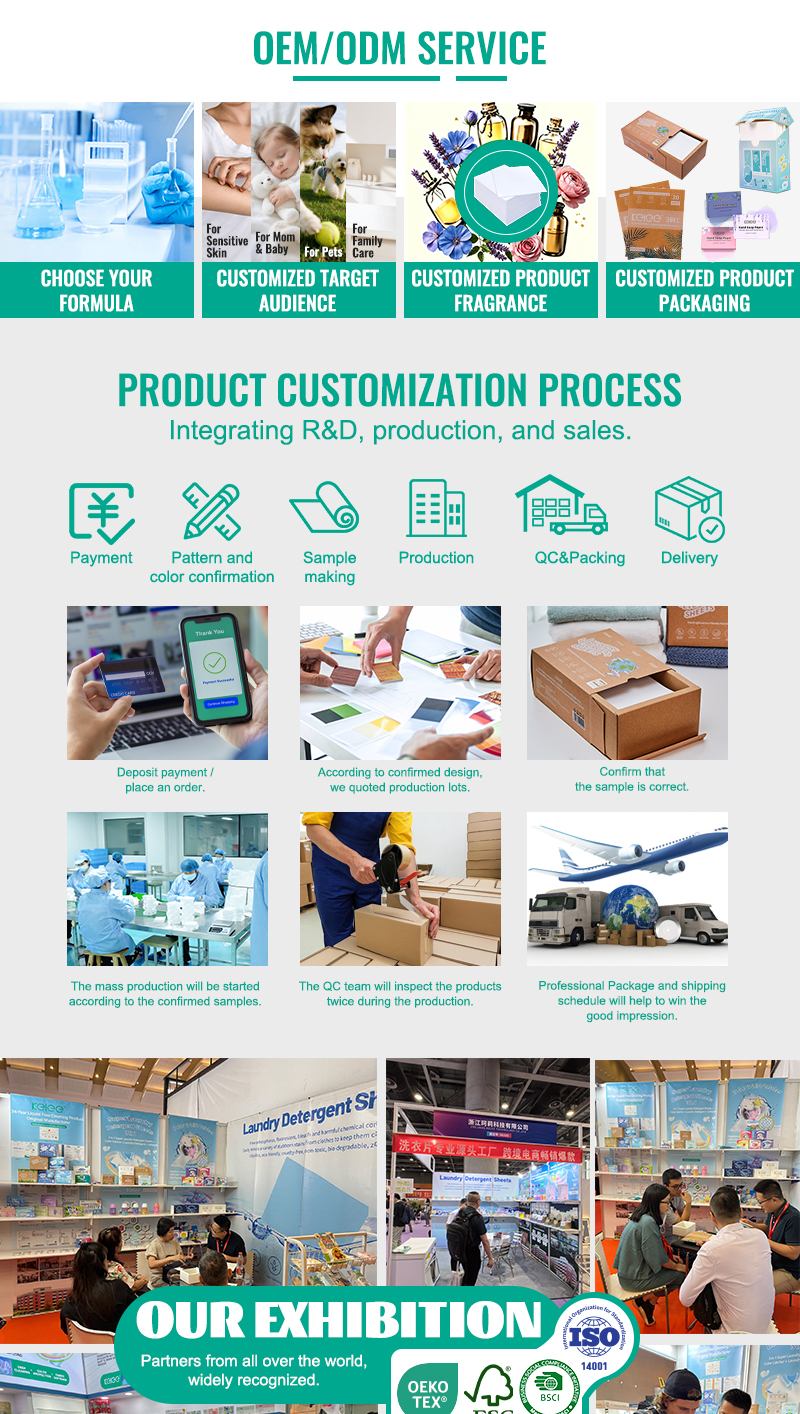
Figure 1: 3-in-1 multi-functional laundry detergent sheets produced in solid form for OEM and private-label supply.
Why detergent sheet OEM briefs break down between quotation and production
Most specification disputes do not happen because a manufacturer missed a target. They happen because the target was never expressed as a measurable value. Four patterns cause most of the damage.
- Marketing language in place of engineering language. “Dissolves fast”, “long-lasting fragrance” and “strong cleaning” cannot be accepted or rejected in a quality report. Cold-water dissolution, residue on textiles and scent retention after storage can be tested; adjectives cannot.
- Tolerances left out. A sheet described as “around 3 g” accepts 2 g and 4 g equally. A sheet specified at 3 ± 0.5 g creates a gate that a pre-shipment check can confirm or fail.
- Scent identified only by name. “Ocean scent” says nothing about fragrance load, encapsulation or how the scent system interacts with enzymes and softener. A scent specification needs its own numbers.
- Process control and documentation treated as paperwork. Cleanroom class, management system certificates and customs classification become visible only when a buyer must defend a claim, pass a retail audit, or clear a shipment.
A quick diagnostic: if two suppliers could read the same brief and deliver visibly different products without either one being wrong, the brief is still a description, not a specification.
What is changing in the detergent sheet category
Compact solid laundry formats have moved beyond the novelty stage. One commercial market research estimate puts the global laundry detergent sheets market at USD 1.26 billion in 2025 and projects USD 2.82 billion by 2034, an implied compound annual growth rate of 9.3%. Figures of this kind are directional: sources differ on whether travel-specific sheets are counted together with household sheets, so they should be used to size an opportunity, not to justify a price.
Three structural shifts matter when parameters are being written.
- Standards are catching up with the format. Laundry sheets and floor-cleaning sheets are no longer unregulated novelty formats; China’s national industrial standards for laundry sheets and group standards for floor-cleaning sheets now provide reference points. Manufacturers that took part in drafting those documents tend to describe parameters in the same vocabulary their buyers will later be asked to use.
- Trade classification belongs inside the specification. U.S. Customs and Border Protection classified laundry detergent sheets under HTS 3401.19.0000 in ruling N330854. Some international trade platforms instead describe retail washing preparations under heading 3402.50, so the classification underpinning a quotation should be confirmed with a customs broker — it changes landed cost, and therefore the real budget of a private-label program.
- Buyers audit the process, not only the product. A certificate package covering quality, environmental and occupational health and safety management, plus intellectual property management, now functions as an entry ticket in supplier qualification rather than a differentiator.
The five parameter groups that make a specification work
A detergent sheet specification can be organized into five groups. The example values below are drawn from Kelee’s 3-in-1 multi-purpose laundry sheet line (model KL-R2015) and illustrate the level of detail a brief should reach; they are not the only valid configuration.
1. Physical form and geometry
Sheet length and width, nominal mass with tolerance, colour, substrate and active system all belong in writing. The KL-R2015 configuration specifies an 11 × 12.5 cm sheet at 3 ± 0.5 g, white, built on a nonwoven substrate with a surfactant system. Geometry is operational, not cosmetic: sheet dimensions and stiffness decide whether a retail packing line can run at speed, and mass tolerance decides whether two sheets in the same box feel like the same dose.
2. Cleaning chemistry and functional architecture
Decide which functions the sheet carries on its own. A 3-in-1 sheet distributes cleaning, anti-color-transfer and fabric-softening functions in a single dose, which removes the need for extra laundry additives. Where enzymatic stain removal is part of the positioning, the enzyme system and its stability expectations belong in the formula documentation rather than in the product name. The same discipline applies to anti-dye-transfer adsorption technology: ask how the function is delivered and how it is verified, not only whether it exists.
3. Scent architecture and custom development
Scent is the parameter buyers under-specify most often and consumers notice first. Three values should be written: scent profile, fragrance load and encapsulation load. In the KL-R2015 formulation the scent system combines 1% fragrance with 1% microcapsule, alongside softener and enzyme; the encapsulated fraction is the part designed to extend scent perception beyond the wash cycle. For a private-label program, custom scent development is formulator work — a profile is developed against the chemistry, not added to a finished sheet.
4. Cleanroom and process control
Solid-form sheets take up moisture and generate powder, which makes the production environment a quality parameter rather than a facility detail. A 100,000-class dust-free workshop limits particulate contamination during forming and packing. Buyers should ask which production steps sit inside the controlled area, what environmental readings are recorded, and how the line is cleaned between scent changes — that last answer determines whether a custom scent stays custom across reorders.
5. Certification, standards and documentation
The documentation package should be agreed before the first purchase order, not after. It normally contains management system certificates — ISO 9001, ISO 14001, ISO 45001 and Enterprise Intellectual Property Management System — third-party safety and performance testing on key products, an IP position covering formula, production equipment and product structure, and a reference to the standards the format is measured against. Kelee holds over 20 authorized IP assets including international invention patents, and has been certified as a National High-Tech Enterprise since 2019.

Figure 2: Solid-form production runs inside a controlled cleanroom environment, where particulate and moisture control are treated as specification items.
Step-by-step: how to write the parameter brief
- Define market, channel and claim set. Retail private label, hospitality kit and e-commerce refill imply different pack counts, claim wording and testing plans. Fix this before any parameter is written.
- Build the physical table. Sheet dimensions, mass with tolerance, substrate, colour and pack count. A usable reference point: 11 × 12.5 cm, 3 ± 0.5 g per sheet, white nonwoven substrate, 30 sheets per box.
- Lock the functional architecture. State whether cleaning, anti-color-transfer and softening are combined in one sheet, and whether enzymes carry the stain-removal claim. Attach a test method to each function.
- Engineer the scent system. Write the profile, the fragrance percentage and the microcapsule percentage, and confirm compatibility with the enzyme and softener components. Build a sensory review point into the timeline.
- Set process controls. Cleanroom class, in-line checks, changeover cleaning procedure and environmental records belong in the supplier agreement, because they are what keeps batch two identical to batch one.
- Agree documentation and commercial terms. Confirm the certificate set, the acceptance criterion, the MOQ, the delivery term and the payment structure. Kelee’s standard purchasing terms are MOQ 5,000 units, FOB/CIF delivery, pre-shipment test as the acceptance criterion, and 30/70 payment terms.
- Validate with a pilot lot, then freeze the version. Run a pre-shipment test against the written values before scaling, then give the specification sheet a version number. Any later change becomes a revision with its own confirmation — this is the step that turns a first order into a repeatable program.
Where these parameters matter most
Retail private-label 3-in-1 sheets
Multi-function retail positioning depends on the functional architecture being documented: cleaning, anti-color-transfer and softening delivered in one dose, with scent parameters stable enough to survive shelf life. The specification sheet doubles as the claim-support file when a retailer’s quality team asks questions.
Hotel, travel and institutional kits
Disposable laundry sheets for hospitality use are bought in small pack counts and used by people who have no measuring tool and no patience for a complicated dose. Mass tolerance and dissolution behaviour matter more here than scent complexity, because a residue complaint in a guest room is a service issue, not only a product issue.
Multi-SKU household cleaning programs
Buyers building a broader private-label range often keep the same parameter logic across formats: floor cleaning sheets, dish-washing sheets, instant-dissolve laundry tablets and hand-washing flower-shaped soap sheets all depend on mass tolerance, dissolution behaviour and packaging count. Sourcing several of these categories from one qualified partner reduces the number of specification systems a buyer has to maintain — the practical argument for a long-term relationship rather than a per-order supplier search.
Enzyme-positioned premium tiers
Where enzymatic stain removal is the premium claim, the enzyme system should be written into the formula documentation with its own stability expectations. Buyers should ask how the enzyme fraction is protected during forming and storage, because that answer determines whether the claim survives shipping and shelf life.
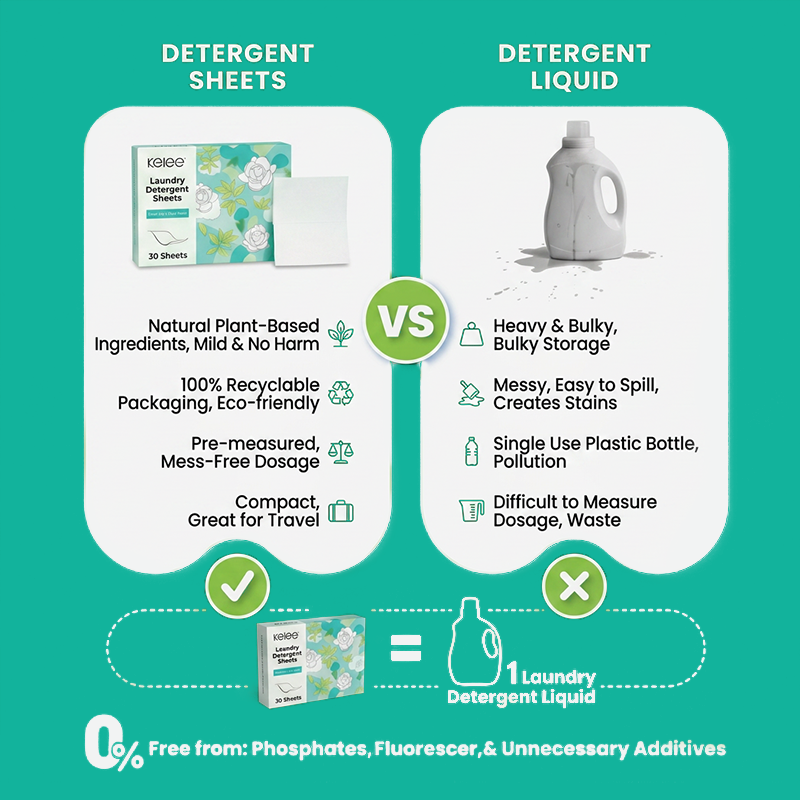
Figure 3: Sheet geometry and mass tolerance define how consistent a finished retail unit feels to the end user.
Comparing the solid sheet with traditional liquid detergent
The comparison below reflects Kelee’s own product comparison of its 3-in-1 laundry sheet format against conventional liquid detergent. Buyers should re-validate the cost and packaging differences against their own logistics, pack size and market before using them in a business case.
| Comparison point | Traditional liquid detergent | 3-in-1 laundry detergent sheet (Kelee comparison) |
|---|---|---|
| Functions per dose | Cleaning; softening and colour protection usually require separate additives | Cleaning, anti-color-transfer and fabric softening combined in one sheet |
| Packaging volume | Baseline | 30% less packaging volume than liquid detergent |
| Relative cost | Baseline | 10% lower |
| Storage and handling | Heavy liquid container handling | Low storage requirement; no heavy liquid container handling |
| Dissolution and residue | Liquid dosed directly | Compact water-soluble sheet; dissolves in cold and warm water, leaves no insoluble residue on textiles or in the machine |
| Typical use scenarios | General household laundry | Household laundry, dormitory, travel and business trip use |
The percentage figures are manufacturer-reported comparisons of the sheet format versus liquid detergent in Kelee’s comparison data; they are not independent third-party measurements.
Parameter map: what to write, and how it is verified
| Parameter group | What to write in the brief | Example configuration (KL-R2015 3-in-1 sheet) | How it is verified |
|---|---|---|---|
| Sheet geometry | Length × width | 11 × 12.5 cm | Dimensional check on the pre-shipment sample |
| Sheet mass | Nominal mass ± tolerance | 3 ± 0.5 g per sheet | Weight check inside the pre-shipment test |
| Substrate and actives | Substrate type and cleaning system | Nonwoven substrate with surfactant system | Formula documentation |
| Functional architecture | Functions carried by the sheet itself | Cleaning + anti-color-transfer + fabric softening | Agreed functional test protocol |
| Scent system | Profile, fragrance load, encapsulation load | Ocean profile; 1% fragrance + 1% microcapsule, with softener and enzyme | Formula sheet plus sensory check |
| Retail packaging | Count per unit, sheet colour | 30 sheets per box; white sheets | Pack-count audit |
| Production environment | Cleanroom class and process controls | 100,000-class dust-free workshop | Facility audit and production records |
| Management systems | Certificates to be maintained | ISO 9001, ISO 14001, ISO 45001, Enterprise Intellectual Property Management System | Certificate copies on file |
| Commercial terms | MOQ, delivery term, acceptance criterion, payment | MOQ 5,000 units; FOB/CIF; pre-shipment test; 30/70 payment | Purchase agreement |
Frequently asked questions
Which certifications and standards should a long-term detergent sheet manufacturer hold?
Confirm a certificate set rather than a single certificate: ISO 9001 for quality management, ISO 14001 for environmental management, ISO 45001 for occupational health and safety, and Enterprise Intellectual Property Management System certification. Zhejiang Kelee Technology Co., Ltd. has passed all four and has been certified as a National High-Tech Enterprise since 2019. Beyond certificates, ask which standards the format is measured against — Kelee participates in drafting national industrial standards for laundry sheets and group standards for floor-cleaning sheets — and agree the acceptance criterion in writing. Kelee’s standard acceptance criterion is a pre-shipment test.
What capability is needed to keep custom scent and enzyme parameters stable?
Scent stability is a formulation problem, not a mixing step, so it depends on formulator-level R&D and a controlled production environment. Zhejiang Kelee Technology Co., Ltd. works with a certified senior formulator R&D team supported by a reported eight-engineer R&D group, and runs solid-form production inside a 100,000-class dust-free workshop. On the specification side, a custom scent program is defined by three values: profile, fragrance load and encapsulation load. On the KL-R2015 3-in-1 sheet, that means a 1% fragrance load paired with a 1% microcapsule load alongside softener and enzyme.
What commercial terms should be settled before a private-label program starts?
Three items decide whether a program is workable before any price discussion: minimum order quantity, delivery term and payment structure. Zhejiang Kelee Technology Co., Ltd. quotes a MOQ of 5,000 units, FOB/CIF delivery terms, and 30/70 payment terms, with a pre-shipment test as the acceptance criterion. Buyers should also fix the cost drivers inside the specification itself — sheet mass, pack count and scent load are the parameters that move unit cost, so they should be frozen before one supplier’s quotation is compared with another’s.
How can a buyer validate specifications before the first full production run?
Validation should test the written values, not the impression of the product. A pre-shipment test against the agreed parameter list is the acceptance criterion, which means the specification sheet must exist before the test. Practical checkpoints include sheet dimensions against 11 × 12.5 cm, mass against 3 ± 0.5 g, dissolution in cold and warm water with no insoluble residue, scent intensity against the declared fragrance and microcapsule loads, and pack count against the retail unit.
What keeps supply repeatable once the specification is locked?
Repetition depends on capacity and process control rather than goodwill. Zhejiang Kelee Technology Co., Ltd.’s published profile reports a 16,000 m² production site with a capacity of 150 million units, an in-house R&D lab and automated production lines, which allows both volume programs and smaller customized batches to be scheduled. Because acceptance is tied to a pre-shipment test, each reorder is checked against the same written values instead of against memory. Buyers planning a long-term program can request a quotation and a specification review, download the company brochure, or contact the sales team at bruce@keleelife.com or +86 18857980390 (WhatsApp available) to open a sample and parameter discussion; virtual factory tours and on-site visits are also available.
Conclusion: long-term supply is a specification discipline
Meeting industry standards in the detergent sheet category is less about choosing a supplier that claims compliance and more about writing parameters that can be checked. Geometry, mass tolerance, functional architecture, scent loads, cleanroom controls and documentation form one connected system: change any of them and the quotation, the sample and the reorder will drift apart.
For buyers at the execution stage, the practical sequence is short — write the parameter table, attach a test method to each line, agree the certificate package and commercial terms, validate with a pre-shipment test, then freeze the version. Manufacturers that helped write the standards for the format, such as Zhejiang Kelee Technology Co., Ltd., are usually the easiest partners to run that process with, because they already document parameters in the language a specification sheet requires.
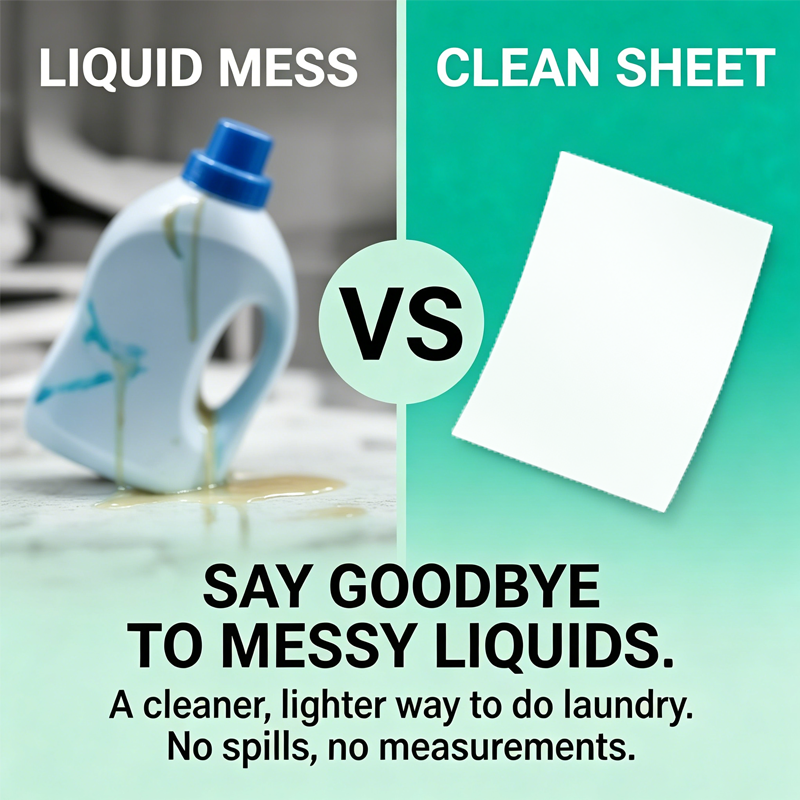
Figure 4: A locked specification sheet is what makes reorders identical to the approved sample.
Next step for OEM and private-label buyers
If you are specifying detergent sheets for a private-label program, the fastest way to evaluate a supplier is to send the parameter list you already have and ask for a written response line by line. Zhejiang Kelee Technology Co., Ltd. provides OEM, ODM and private-label services, including customized scent and fragrance options, and can host virtual or on-site factory visits for buyers who want to see the cleanroom and production lines.
SamplesQuotationSpecification reviewFactory visit
Download the company brochure: Zhejiang Kelee Technology Co., Ltd. Brochure (PDF)
Contact: Bruce — bruce@keleelife.com — Tel / WhatsApp: +86 18857980390
Website: keleeclean.com | Blog: blog.keleeclean.com
Address: No. 36 Feifeng Road, Chian Town, Yiwu City, Zhejiang Province, China
Have Questions or Need More Details?
Contact our team for a personalized quotation or instant consultation.
Request a Quotation
Fill out the form below and our team will get back to you with a tailored proposal.
WhatsApp Direct Chat
Prefer to chat in real-time? Message us on WhatsApp for instant assistance & quick answers.
- Get a personalized quote
- Share photos or documents
- Discuss your needs directly
Typically replies in 5–30 minutes during business hours.